

An isolation transformer is not just another electrical component. It is the invisible shield between the shore supply and the onboard system: it separates, protects and isolates — ensuring electrical safety and zero galvanic corrosion, wherever you are berthed.
Technical features
The isolation transformer electrically separates the onboard system from the dock supply: the two circuits have no point in common. This means that any faults or leakage on the shore side never reach the vessel — and vice versa.
The stray currents flowing through the water between the dock and the hull are the main cause of galvanic corrosion, which quietly damages propellers, shafts, anodes and submerged metal structures. Galvanic isolation stops them at the source.
In water, even a small electrical leakage can be dangerous. The isolation transformer removes the direct connection to the neutral of the shore supply, eliminating the risk of electric shock for anyone in the water near the vessel — an essential requirement in modern marinas and one called for by the ABYC and IEC 60364-7-709 standards.
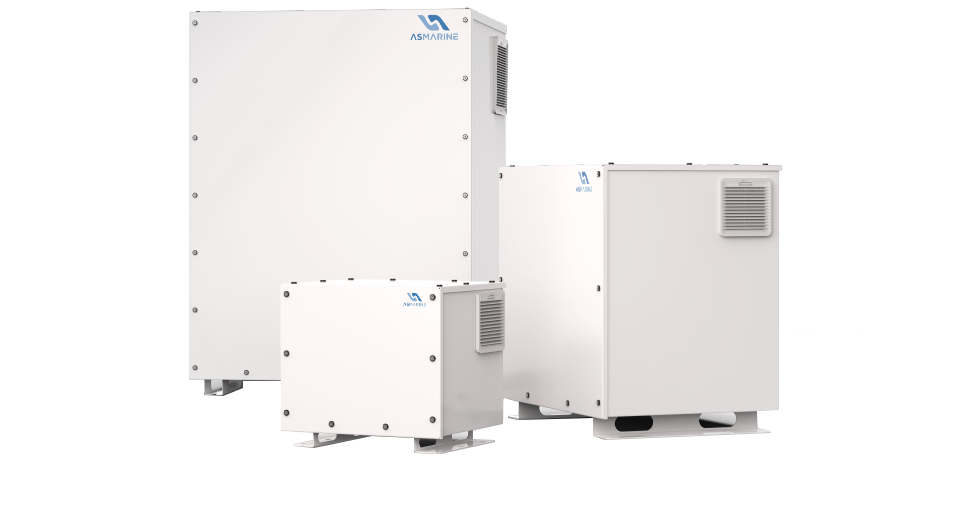
Each transformer is sized on the actual power of the onboard system and on the space available in the engine room. We build toroidal versions — compact, quiet, with very low flux leakage, ideal where space is tight — and column versions, more robust and suited to high power ratings or to environments with significant vibration.
Each transformer is delivered already integrated in its powder-coated AISI stainless steel or marine aluminium enclosure, complete with a forced ventilation unit sized for the power rating and with stud-type terminals for safe, reliable power connections suited to the marine environment. A single pre-assembled and tested system.
Isolation transformer
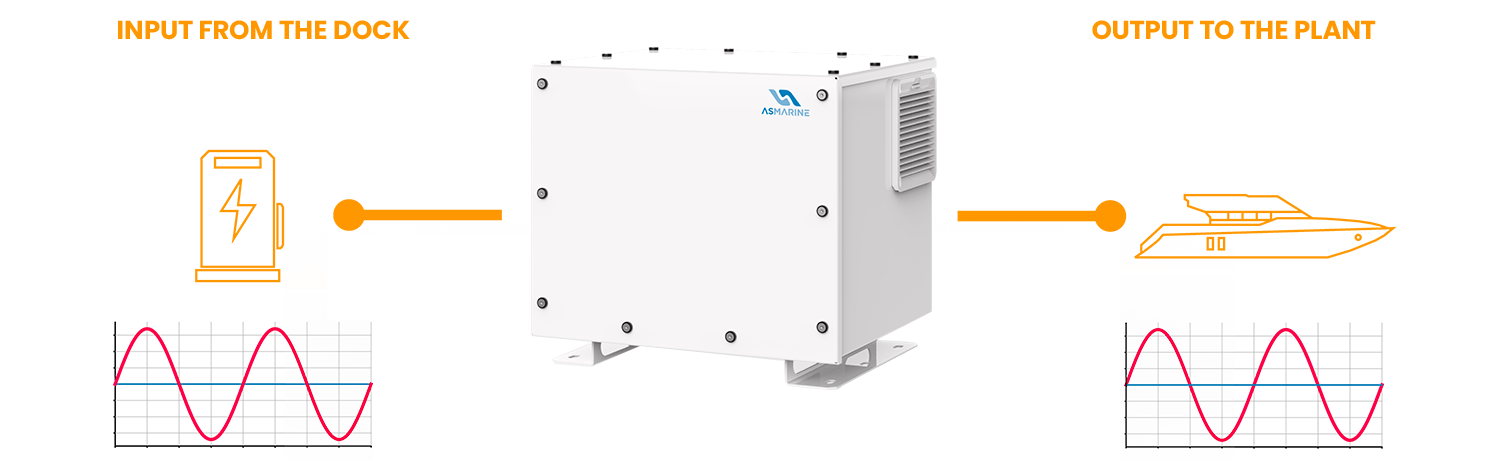
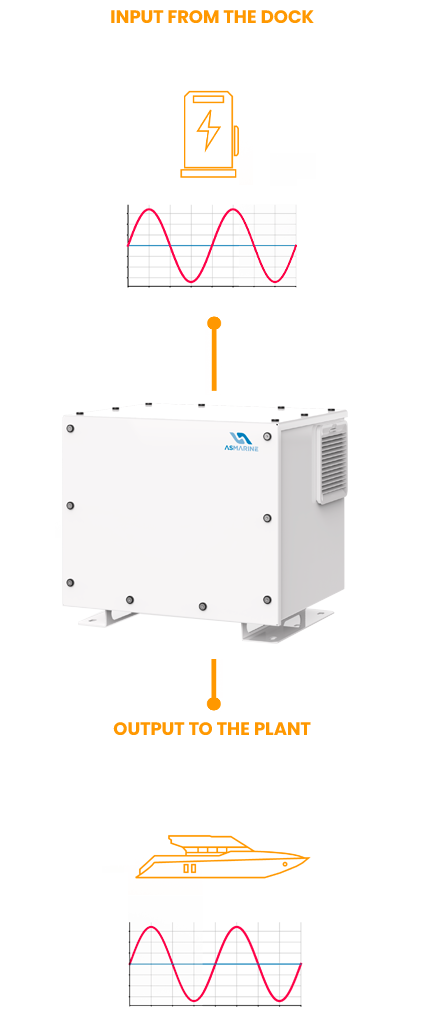
- The voltage delivered by the transformer to the vessel’s system remains the same as the dock voltage.
- Voltage and frequency are not altered in any way.
- The transformer provides complete galvanic isolation between the dock and the vessel’s system.
Main function
Typical application
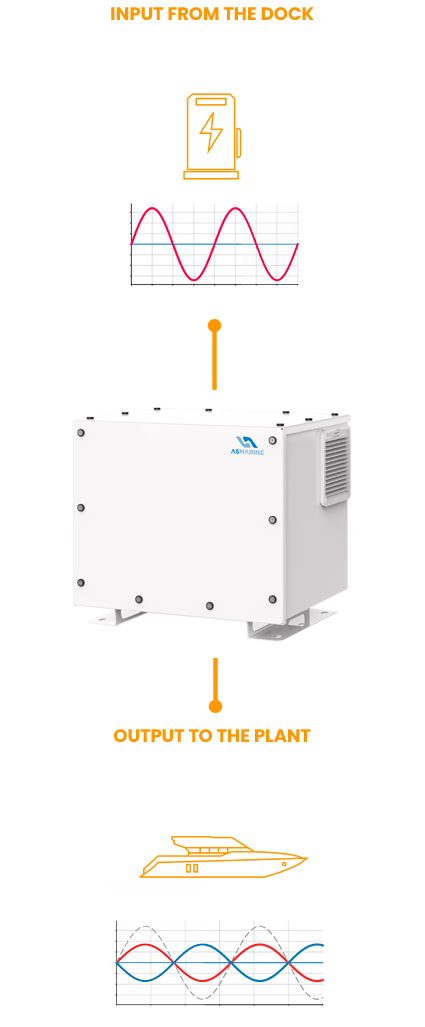
Step-up or step-down isolation transformer
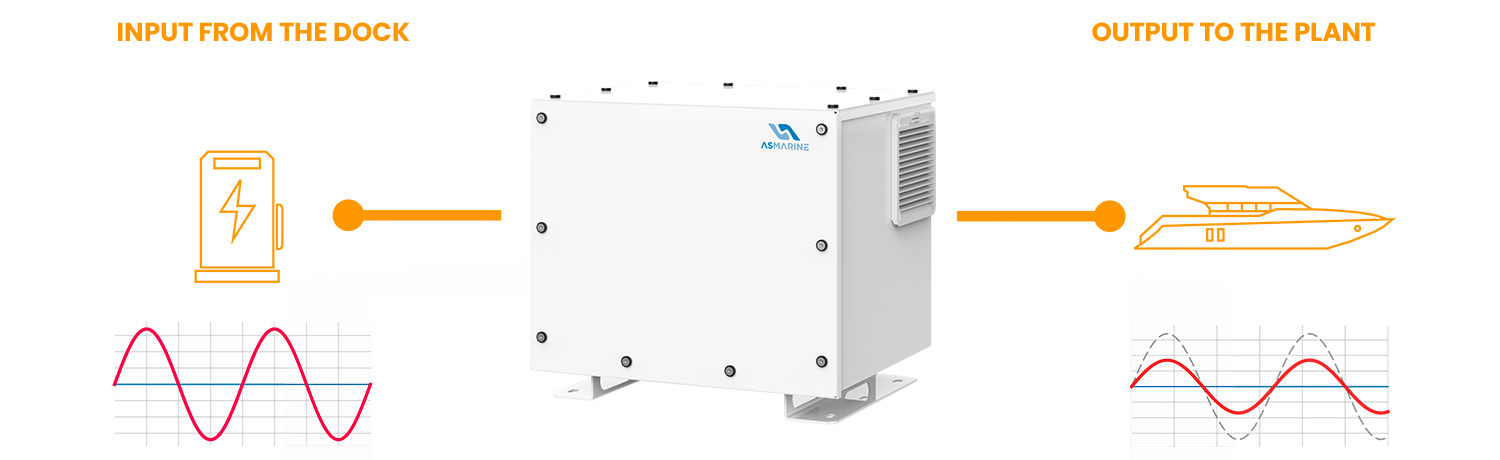
- The turns ratio between the primary and the secondary winding is not 1:1
- The voltage delivered to the vessel’s system is permanently higher or lower than the dock voltage
- The transformation ratio is fixed and defined and cannot be changed later
MAIN FUNCTION
TYPICAL APPLICATION
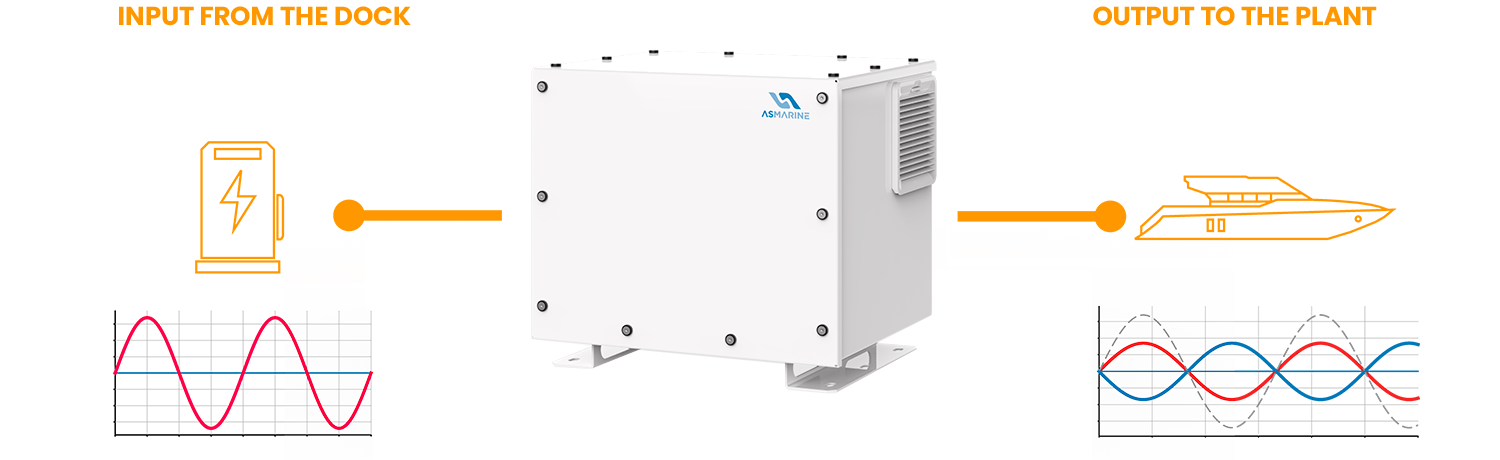
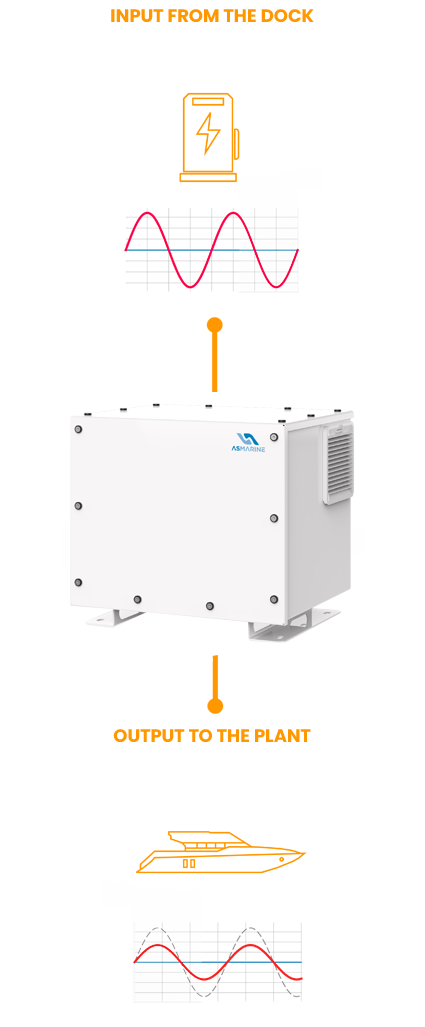
Phase-conversion isolation transformer
- Allows the form in which the voltage is delivered to the vessel’s system to be changed
- Various phase configurations and voltage levels are possible
- This configuration also provides galvanic isolation, and the frequency remains unchanged
MAIN FUNCTION
TYPICAL APPLICATION
For more information, please contact us by filling out the form on the side.